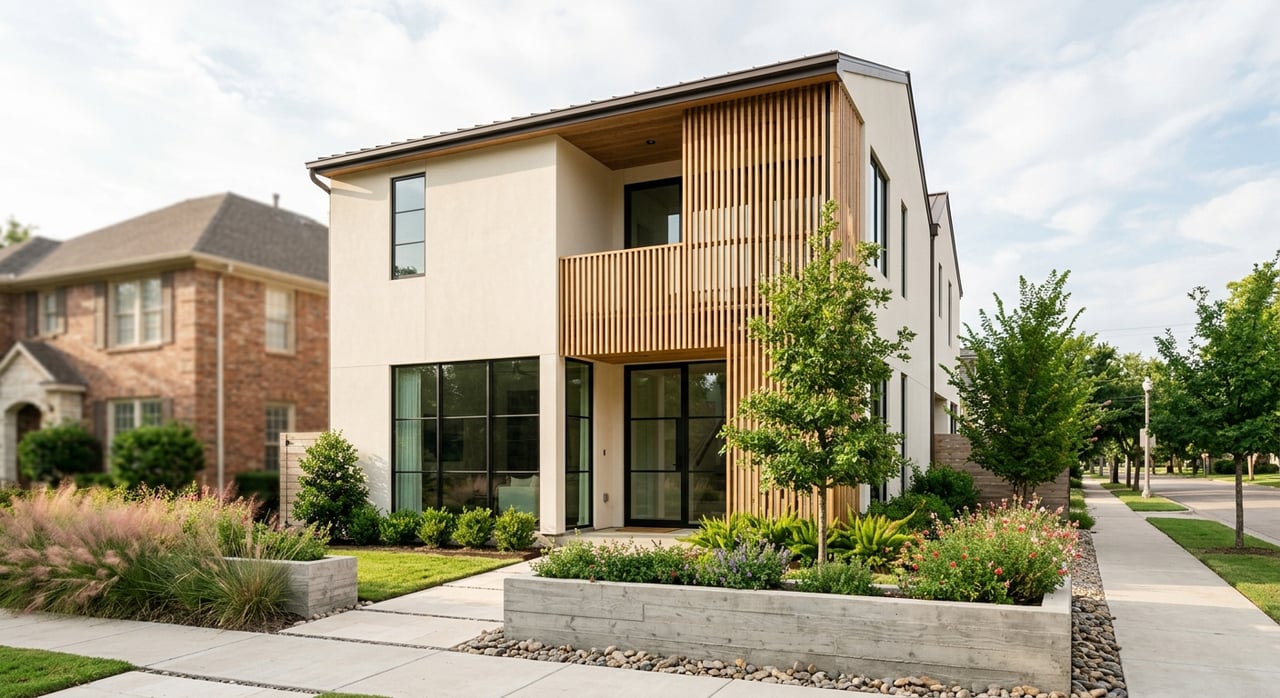
Choosing between urban Dallas and the suburbs is not just about your address. It is about how you want to live each day, how much space you want to maintain, how you plan to get around, and what your ownership costs may look like over time. If you are weighing Dallas, Plano, or Irving, the smartest move is to compare lifestyle tradeoffs side by side so you can focus on the fit that matters most to you. Let’s dive in.
Dallas Housing Is Not One Market
The Dallas metro includes very different housing patterns, even within a relatively close geographic area. In the 2020 to 2024 ACS period, the owner-occupied housing rate was 42.4% in Dallas, 56.9% in Plano, and 38.1% in Irving.
Home values also varied. The median owner-occupied home value was $320,700 in Dallas, $465,900 in Plano, and $315,600 in Irving. That alone shows why a broad search for "Dallas area homes" can miss the real tradeoffs.
Commute times, at least at the city level, were fairly close. Mean travel time to work was 25.7 minutes in Dallas, 25.4 minutes in Plano, and 24.1 minutes in Irving. In practice, that means your daily experience often depends more on the exact neighborhood, route, and housing type than on the city name alone.
Urban Dallas Lifestyle Tradeoffs
If you are drawn to urban Dallas, you may be prioritizing proximity and flexibility. A more urban setting can mean easier access to employment centers, dining, entertainment, and transit options, along with a more compact day-to-day rhythm.
That compact rhythm usually comes with tradeoffs. In many urban areas, homes may sit on less private land, and your housing choices may include a broader mix of detached homes, attached homes, and multifamily options.
For some buyers, that is a benefit rather than a drawback. Less exterior space can mean less yard work and less ongoing maintenance, which may free up time for work, travel, or weekends out in the city.
Suburban Dallas Lifestyle Tradeoffs
If you are leaning suburban, you may care more about separation between homes, more storage, and more exterior space. In the Dallas area, Plano offers one of the clearest examples of this lower-density pattern.
Plano’s 2025 certified roll shows 73,625 single-family residential properties compared with 1,575 multifamily properties. It also shows 1,893.0224 acres classified as single-family and 132.9608 acres as multifamily, which strongly supports a more detached-home-oriented housing pattern.
That kind of housing mix often appeals to buyers who want a more traditional single-family layout. You may find that a suburban setting better matches your priorities if you want more yard space, garage storage, or a home that feels more physically separated from neighboring properties.
Irving As A Middle Ground
Irving can offer a different balance. It combines access to the broader Dallas employment and transit network with a median owner-occupied home value that is lower than Plano’s.
Dallas CAD’s 2025 median detached single-family residence values were $307,030 in the City of Dallas and $341,870 in the City of Irving. That suggests buyers comparing Irving with Dallas and Plano are often sorting through a middle-ground option rather than a strict urban-versus-suburban split.
For some households, Irving works because it can pair inner-suburban convenience with transit access and a different price point than Plano. The right fit depends on whether you value that balance more than a denser urban setting or a more detached suburban pattern.
Home Types And Space Matter
One of the biggest decision points is not just price. It is the kind of home you want to live in every day.
A more urban search may give you access to compact, amenity-rich living with less private land to maintain. A more suburban search may give you a stronger concentration of detached homes, more exterior space, and a different daily feel.
This is where your lifestyle should lead the process. If you want to lock the door and spend less time on upkeep, urban housing may fit better. If you want room for outdoor projects, storage, or a larger yard, suburban options may rise to the top.
Commute And Transit Are More Nuanced
Many buyers assume suburban living automatically means a longer, car-dependent routine. In Dallas, that assumption does not always hold up.
DART serves 13 cities across 700 square miles. It operates 93 miles of light rail with 65 stations and reports more than 171,000 passengers per day. Dallas, Irving, and Plano are all DART member cities, so each offers some level of transit connection.
DART also operates GoLink on-demand zones in South Irving and in North Central Plano and Chase Oaks. That means transit access is part of the suburban conversation too, not just the urban one.
Because average commute times are fairly similar across Dallas, Plano, and Irving, the more useful question is often corridor-specific. You will want to think about your exact route to work, airport access, rail access, and the places you visit most often during the week.
Property Taxes Can Shift The Math
Purchase price is only one part of the ownership picture in North Texas. Property taxes can vary significantly based on the exact tax district stack tied to a home.
In Texas, local taxing entities set tax rates, and appraisal districts value property at market value. A property may also generate multiple tax bills if it spans more than one jurisdiction, and homestead caps and exemptions can affect the final taxable amount.
For 2025, the Dallas County rate table lists Dallas County at 0.215500, Parkland Hospital at 0.212000, Dallas College at 0.106575, the City of Dallas at 0.698800, Dallas ISD at 0.993835, the City of Irving at 0.589100, and Irving ISD at 1.015900, all per $100 of taxable value. In Collin County, the adopted 2025 county rate is 0.149343, while certified totals show the City of Plano at 0.4176000, Plano ISD at 1.0424500, and Collin College at 0.0812200.
Using the Census median owner-occupied values and those official base rates, an illustrative annual property tax bill works out to about $7,141 in Dallas, $6,751 in Irving, and $7,877 in Plano before exemptions and any special district assessments. These are rough comparisons, not exact tax bills, but they are a helpful reminder that two homes with similar list prices can carry different long-term costs.
How To Compare Dallas, Plano, And Irving
If you are deciding where to focus your search, it helps to narrow the tradeoffs into a few practical filters. That gives you a framework you can actually use when touring homes.
Start with these questions:
- How many minutes do you want to spend in the car each day?
- Do you want rail access to play a role in your routine?
- How important are yard space, garage storage, and physical separation between homes?
- How sensitive are you to property tax differences across cities and districts?
- Do you want a compact, amenity-rich daily rhythm or a more conventional detached-home pattern?
These questions often reveal more than a broad city comparison. They help connect the housing search to the life you actually want to build.
The Best Choice Depends On Your Priorities
Urban-core Dallas often makes the most sense if proximity, transit optionality, and a compact lifestyle matter most to you. Plano tends to fit buyers who want a more detached-home-oriented environment and are comfortable with a higher median home value and potentially higher illustrative tax burden.
Irving may appeal if you want a middle ground. It can offer DART access, a lower median owner-occupied home value than Plano, and a different balance between access and space.
In other words, the best answer is rarely "urban is better" or "suburban is better." The right answer is the one that lines up with your daily routine, your budget, and the way you want your home to support your lifestyle.
If you want help comparing Dallas, Plano, or Irving through a lifestyle-first lens, Matt Wood can help you sort through the tradeoffs and focus on the neighborhoods and home types that fit you best.
FAQs
How do Dallas and Plano home values compare?
- In the 2020 to 2024 ACS period, the median owner-occupied home value was $320,700 in Dallas and $465,900 in Plano.
Is Irving more affordable than Plano for homebuyers?
- Based on the 2020 to 2024 ACS data, Irving had a median owner-occupied home value of $315,600 compared with $465,900 in Plano, so Irving was lower on that measure.
Are commute times very different across Dallas, Plano, and Irving?
- Mean travel time to work was 25.7 minutes in Dallas, 25.4 minutes in Plano, and 24.1 minutes in Irving, so citywide averages were fairly similar.
Does suburban Dallas always mean car-only living?
- No. Dallas, Irving, and Plano are all DART member cities, and DART serves 13 cities with light rail, stations, and additional GoLink service in parts of Irving and Plano.
Why can Dallas-area property tax bills vary so much?
- Property tax bills can vary because local entities set rates, properties may fall under different jurisdictions, and exemptions or homestead caps can change the taxable total.
What is the main lifestyle tradeoff in urban vs suburban Dallas housing?
- A practical way to frame it is urban Dallas often offers more proximity and a compact daily rhythm, while suburban areas often offer a stronger detached-home pattern and more exterior space.