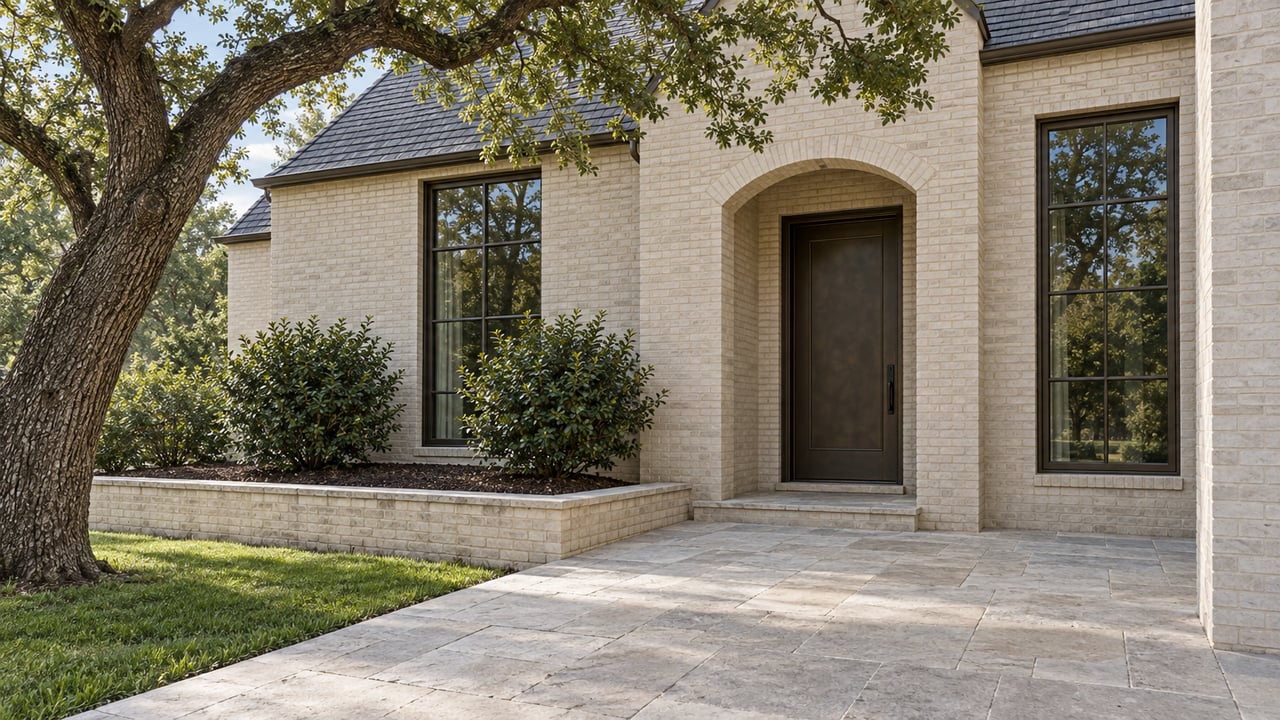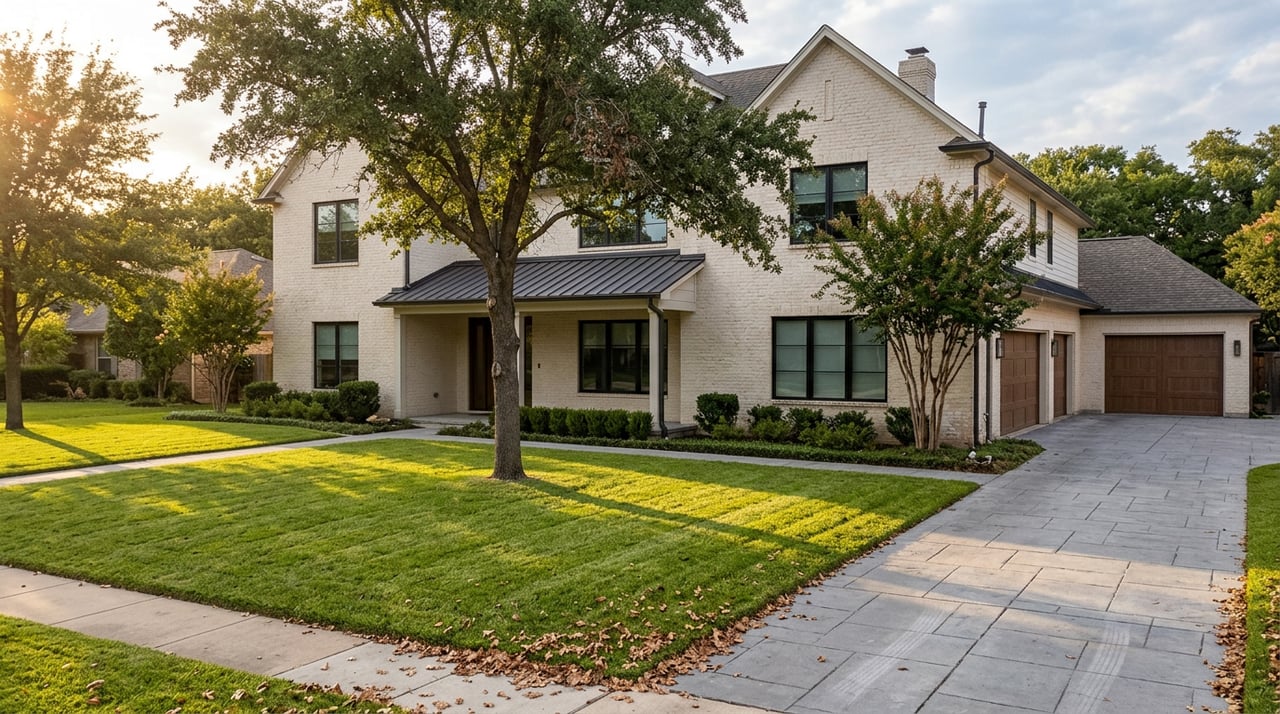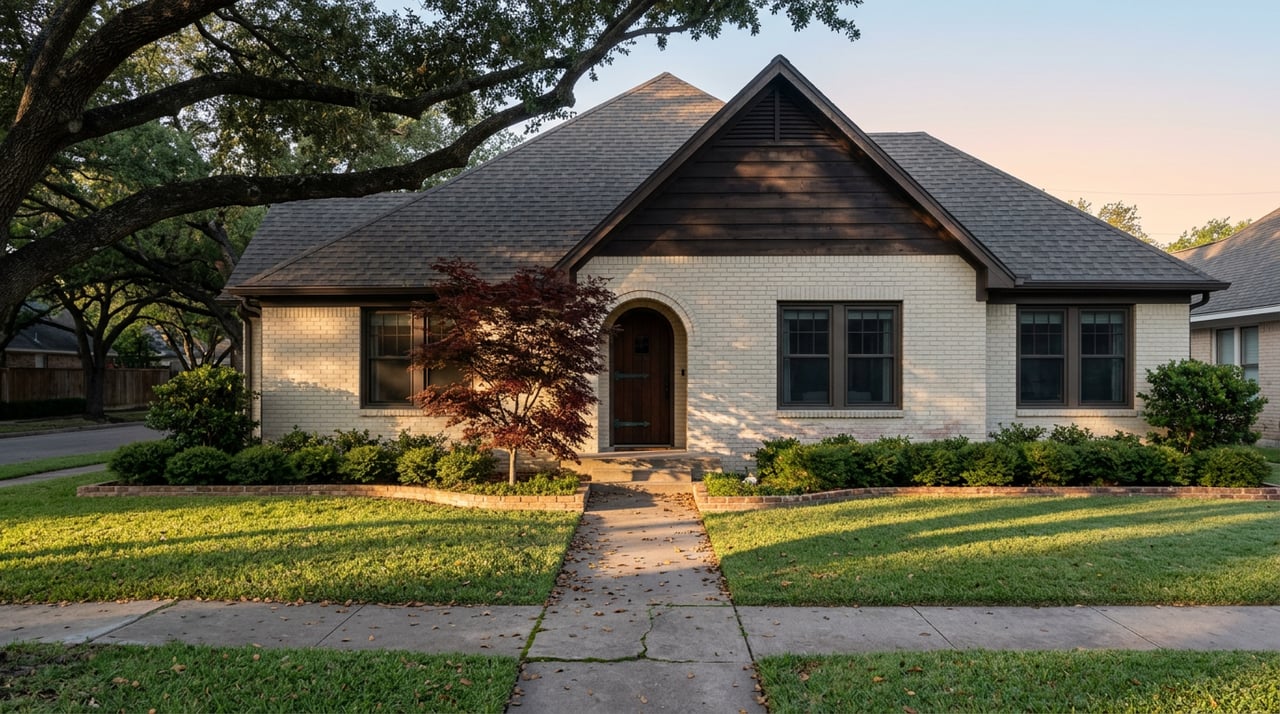
Two buyers can put offers on East Dallas bungalows three blocks apart, pay within a few thousand dollars of each other, and end up on completely different renovation timelines the moment they hire a contractor. Not because of the house. Because of which side of Skillman Avenue, Greenville Avenue, or Goodwin Avenue the lot sits on.
East Dallas is stitched together from more overlapping preservation rules than almost anywhere else in the city. Greenland Hills, M Streets East, Vickery Place, Belmont Addition, Hollywood Heights and Santa Monica, Munger Place, Swiss Avenue: each one governs exterior changes differently, and the boundary lines between them often run down the middle of a street rather than around a whole neighborhood. A buyer comparing listing prices is comparing the wrong number. The overlay that comes with the deed is what actually decides how many months a kitchen bump-out or a new front porch will take.
What "Conservation District" Actually Controls
A conservation district in Dallas is a zoning overlay, not an HOA rule and not a historic designation in the strict sense. It regulates what's visible from the street: rooflines, facades, additions, fences, sometimes materials. Interior work is generally left alone unless it changes the exterior appearance.
The part that catches buyers off guard is the sequencing. In a conservation district, you need what the city calls a Work Review Form, or CDWR, and you need it approved before you can even apply for a standard building permit. Compliance is required whether or not the project would otherwise need a permit at all. Skip that step in the M Streets Conservation District specifically, and the penalty can run up to $2,000 per day, per offense, enforced by the city's Code Compliance department. Once approved, the form has to go in the window so a code inspector can confirm it on sight.
For straightforward projects, that review can move fast. Multiple sources describe simple exterior items clearing in days to a couple of weeks at the staff level. Anything that reaches a neighborhood Work Review Board, or involves new construction or a major remodel, tends to stretch into several weeks to a couple of months. Buyers who assume "conservation district" means a rubber stamp are usually the ones who get stopped mid-project.
The Same Stretch of East Dallas, Six Different Rulebooks
Drive from Central Expressway to Skillman Avenue through Old East Dallas and you cross through several distinct overlays, each with its own history and its own architectural personality:
- Greenland Hills, the M Streets (Conservation District No. 9): formed in 2002 after a wave of teardowns replaced Tudor and Craftsman homes with construction that didn't match the block. About 65 percent of the homes here are Tudor Revivals, according to a Dallas Morning News review of the district.
- M Streets East (Conservation District No. 11): split off from Greenland Hills in 2003 to protect its own mix of Craftsman bungalows, Colonial homes, and Tudor Revivals under a separate ordinance.
- Vickery Place (Conservation District No. 15): approved by Dallas City Council on June 28, 2006, bounded roughly by Goodwin Avenue, Central Expressway and Henderson, Belmont, and Greenville Avenue.
- Belmont Addition (Conservation District No. 12): designated in 2004, home to what's often described as the city's best-preserved concentration of 1920s Craftsman bungalows.
- Hollywood Heights and Santa Monica (Conservation District No. 6): became a conservation district in 1989, protecting Tudor cottages near White Rock Lake.
Then there are the two East Dallas neighborhoods governed by the stricter historic district process instead: Munger Place, platted in 1905 and designated a historic district in 1980, and Swiss Avenue, which became Dallas's first local historic district back in 1973. Historic districts route exterior changes through the city's Landmark Commission rather than planning staff, require a Certificate of Appropriateness before work begins, and expect era-appropriate materials. If a submission doesn't fit the ordinance, the city can ask the homeowner to revise and resubmit before anything moves forward.
Conservation vs. Historic, Side by Side
| Conservation District (M Streets, Vickery Place, Belmont, Hollywood/Santa Monica) | Historic District (Munger Place, Swiss Avenue) | |
|---|---|---|
| Who reviews the work | City planning staff, administratively | Landmark Commission, appointed by City Council |
| What you need before a permit | Work Review Form (CDWR) approval | Certificate of Appropriateness |
| Typical timeline for exterior work | Days to a few weeks for simple items; several weeks to a couple of months for larger projects | Longer and less predictable; formal hearings add planning time |
| If you skip the process | Stop-work orders and fines (up to $2,000 per day, per offense, in the M Streets) | Required revisions and resubmission before the project can proceed |
The pattern that matters for a buyer: conservation district review is administrative and mostly predictable. Historic district review is a formal preservation process that can extend a renovation schedule well past what a first-time buyer budgets for.
Why the Enforcement Mechanic Matters More Than the Paint Color
The instinct when buying a fixer-upper is to focus on what you can change. In East Dallas, the more useful question is what has to be approved before you're allowed to change it, and by whom. A buyer who closes on a Greenland Hills Tudor expecting to swap windows or extend a porch before the holidays can lose weeks just waiting on a Work Review Form, on top of whatever the building permit itself requires. A buyer in Munger Place planning the same project should expect a longer runway still, since the Landmark Commission process isn't built for speed.
This is the detail a listing sheet never carries. Two houses at the same price point, a few blocks apart, can require two entirely different renovation calendars for the identical scope of work. That's not a quirk. It's the actual cost structure of buying in Old East Dallas, and it belongs in the same conversation as the sale price.
What This Means If You're Comparing Fixer-Uppers Right Now
East Dallas home prices have barely moved this year. Over the three months ending May 2026, the median sale price sat at $818,000, up just 0.4 percent from the same period a year earlier, while price per square foot rose a more noticeable 2.9 percent to $384. Homes are also moving faster than they were, averaging 26 days on market compared with 35 days a year prior, with 337 homes sold in May 2026 versus 319 the year before.
Zoom out to Dallas County as a whole and the picture flips: the median time on market across the county was 54 days as of May 2026, and a September 2026 look at the broader Dallas market described inventory rising sharply from pandemic-era lows, with sellers increasingly offering price cuts and concessions to close deals. One agent working the Dallas North Tollway corridor put it plainly: "We are in a hyper-local market that is neighborhood to neighborhood."
That description holds inside East Dallas at a finer grain than even he probably meant. It's not neighborhood to neighborhood here. It's block to block, sometimes street-side to street-side. In a market where buyers already have more room to negotiate timelines and concessions, factoring in which overlay governs a specific address, and asking a seller for documentation of any prior Work Review Form or Certificate of Appropriateness approvals before you write an offer, is one of the more useful moves a renovation-minded buyer can make right now.
A Few Questions Worth Asking Before You Write an Offer
How do I find out which overlay applies to a specific address? The city maintains zoning and conservation district maps through its Planning and Development office, and the boundary lines are specific enough that a house on one side of a street can fall outside a district that covers the house across from it. Confirming this before closing, not after, avoids surprises.
Does a conservation district affect interior renovations? Generally no. Review is limited to exterior elements visible from the street. A gutted interior with unchanged windows, rooflines, and facade typically doesn't trigger the same review process, though standard building codes for plumbing, electrical, and safety still apply.
Can I start interior work while exterior approval is pending? In most cases yes, since the two processes are separate. But any project that touches both, like an addition that changes both the footprint and the kitchen, still needs the exterior approval secured before the building permit for the whole project is issued.
East Dallas rewards buyers who do this kind of homework before they fall in love with a porch. If you're comparing fixer-uppers across Greenland Hills, Vickery Place, Belmont, or the historic blocks of Munger Place and Swiss Avenue, Matt Wood can walk the specific overlay rules for any address you're considering before you write an offer, not after.