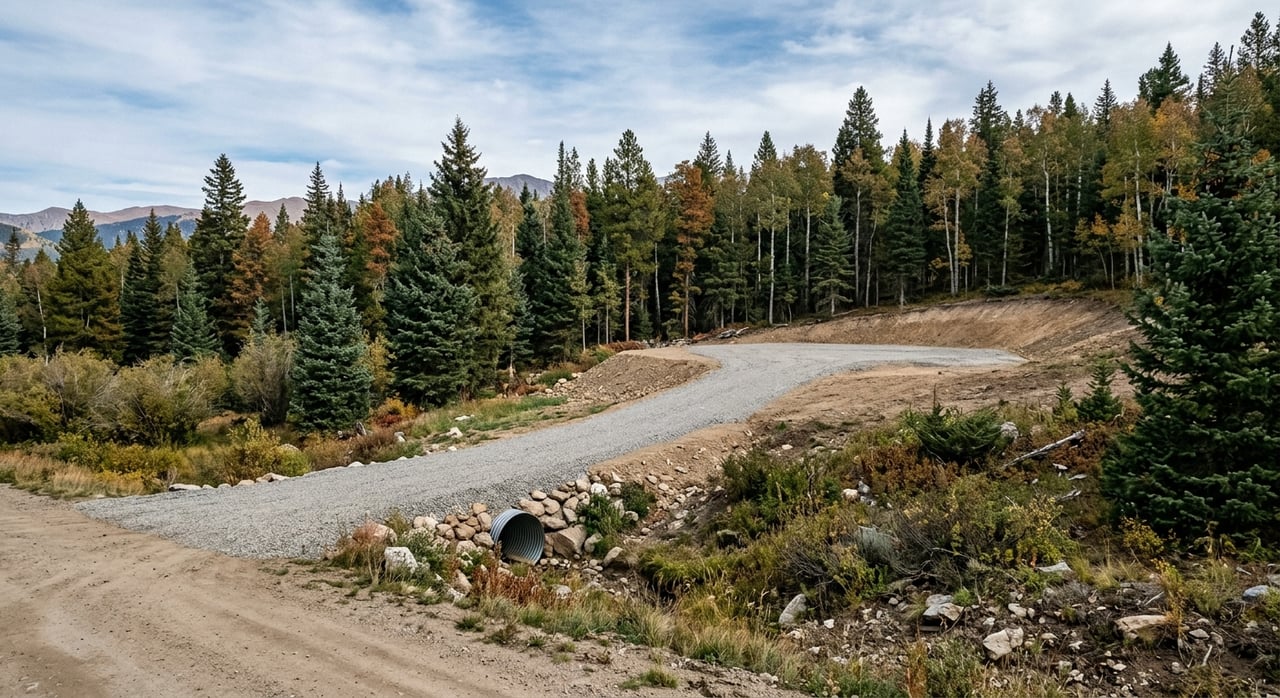
Dreaming about owning mountain land near Creede? It is easy to picture the views, the privacy, and the future cabin. What catches many buyers off guard is that a beautiful parcel is not always a buildable parcel. If you are considering land in Mineral County, you need to look beyond acreage and focus on zoning, access, water, septic, and insurance before you commit. Let’s dive in.
Why Creede-Area Land Needs Extra Review
Buying mountain land near Creede is different from buying a typical homesite in a more developed area. In unincorporated Mineral County, local zoning regulations shape what you can do with a parcel and what steps you may need to take before building.
One of the biggest examples is the county’s Alpine district. This district is designed for environmentally sensitive patented mining-claim lands, and the county notes that basic utilities, emergency services, and county road maintenance are generally unavailable there, either seasonally or year-round. That single detail can change how you evaluate a lot’s true usability and long-term cost.
In the Alpine district, only one single-unit dwelling is allowed per parcel. The dwelling must have at least a 500-square-foot footprint, and one camper or recreational vehicle may be stored but not occupied. If you were hoping to use an RV while you plan a future build, that rule matters right away.
Start With Zoning First
Before you think about house plans, start by confirming the parcel’s zoning district. Mineral County has several districts, including Alpine, Rural, Residential Estate, Residential, Recreational Resort, Commercial, and Industrial, and each comes with its own rules.
Zoning is your baseline, but it is not the same as final build approval. Mineral County’s Land Use Office handles permitting, land use applications, septic permits, and road access permits. The county also states that it has not adopted International Building Codes, though it encourages International Residential Code standards, and state plumbing and electrical inspections are still required.
That means you should treat zoning as the first checkpoint, not the finish line. A parcel may look promising on paper but still face hurdles with access, wastewater, water supply, or site constraints.
Legal Access Matters More Than You Think
Access is one of the most important due diligence items for mountain land. A drivable route is not enough by itself. You also need to know whether access is legal, documented, and practical year-round.
Mineral County is very clear on this point. A county road access permit only establishes the right to enter the county road at a specific point. It does not create legal access to the parcel itself.
That distinction catches buyers all the time. You may see tire tracks, a gate, or a long driveway and assume the issue is solved. In reality, you still need to verify recorded easements, access rights, and whether the route to the property is legally enforceable.
County Road or Private Road?
You also need to know who maintains the road. Mineral County’s Road & Bridge department maintains paved and gravel county roads, including snow plowing, drainage work, and gravel maintenance. A private road is a different story, and upkeep may fall on landowners.
The county’s subdivision rules say road easements must be at least 40 feet wide. Until they meet the county road standard of 60 feet wide, they will not be accepted by the county for maintenance or other road matters.
That can affect more than convenience. Road status can influence winter access, maintenance costs, emergency response, and future resale appeal.
Alpine District Access Rules
If the parcel is in the Alpine district, access needs even closer review. The county allows only one private vehicular access route to a homesite, and new private roads and driveways may not be created without board approval.
The county also notes that roads above 9,400 feet are not guaranteed to stay open. In a mountain market, that makes winter access and emergency egress core buildability issues, not minor details.
Water Is a Separate Question
A common mistake is assuming that because nearby lots have wells, your parcel will automatically qualify for one too. In Colorado, water rights are administered under prior appropriation, and every new well that diverts groundwater needs a well permit.
The Division of Water Resources says it cannot guarantee a permit for a specific parcel until a full application has been filed and evaluated. In other words, you should not buy land based on an assumption that a well permit will be easy.
If the parcel is part of a subdivision or a land split, the water review may be even more detailed. Mineral County requires evidence that a proposed subdivision has a water supply sufficient in quantity, dependability, and quality. The county also requires evidence of ownership or the right to acquire adequate water rights or the right to use an adequate water supply.
What to Ask Early
Before you move too far forward, ask questions like these:
- What is the expected water source for this parcel?
- Has any well permitting work already been done?
- Is the lot part of a subdivision with additional water-rights requirements?
- If the parcel is being divided, will augmentation or other water documentation be needed?
These are not small technicalities. They can affect whether a parcel is ready for a future home at all.
Septic Feasibility Can Make or Break a Build
For many Creede-area parcels, wastewater is just as important as water. Mineral County regulates onsite wastewater treatment systems, or OWTS, under Colorado Regulation 43. These systems must be designed for the property’s soil conditions and designed by a licensed Colorado professional engineer.
The county also says septic compliance is required before a building permit is issued. On top of that, applications and designs should be submitted at least 30 days before construction begins.
This is one reason raw land should never be judged by views alone. A parcel may need specific engineering, site planning, and permitting work before it is truly ready to build.
Improved Parcels Still Need Septic Review
If the property already has a cabin or another structure with septic, do not assume the septic question is already settled. Silver Thread Public Health District requires an OWTS inspection showing the system is functioning before the sale is finalized.
That means even a lightly improved property can face septic-related issues during the closing process. It is smart to verify this early instead of letting it become a last-minute surprise.
Utilities and Internet Need Real-World Verification
Mountain buyers often focus on the home site and views first. The county’s review process is a good reminder that utilities deserve equal attention. Mineral County subdivision regulations specifically ask applicants to address electricity and telephone service, and reviewers may consider utilities, county services, erosion, natural hazards, and environmental impact.
For you as a buyer, that means checking practical questions early:
- Is electric service nearby, and what might extension involve?
- What internet options are realistic for this parcel?
- Will utility installation costs change the overall budget?
- Does the homesite location create added complexity for service connections?
A parcel can be affordable on the front end and still become expensive once utility work is factored in.
Creeks, Floodplain, and Setbacks
If a parcel sits near a creek, stream, or river, building placement may be more limited than you expect. Mineral County zoning requires a 50-foot setback from the high-water mark for primary dwellings and accessory structures.
Floodplain review is another step you should not skip. The county says buyers should check floodplain status and obtain a floodplain development permit from the county floodplain administrator before receiving a building permit when applicable.
For mountain lots, the best homesite is not always the most obvious one on first visit. Water features can add beauty, but they can also narrow your building envelope.
Wildfire and Insurance Belong in Early Due Diligence
Wildfire exposure is a major part of buying mountain property in Colorado. State agencies note that wildfire threats increase as more homes are built in wildland areas, and Colorado’s wildfire risk tools use burn-probability mapping along with other reference layers.
That matters for safety, maintenance, and insurance. The Colorado State Forest Service recommends a home-ignition-zone approach that includes steps such as Class A roofing, vent screening, debris removal from decks and gutters, defensible space, and keeping firewood or propane tanks away from structures.
Colorado’s Division of Insurance has also created tools for homeowners because the insurance market has been challenging, and the FAIR Plan made residential homeowners policies available in April 2025 for situations where coverage is not available through traditional channels. For a land buyer, the takeaway is simple: get insurance quotes before closing, not after.
A Smart Due Diligence Order
When you buy mountain land near Creede, the best process is usually a disciplined one. Instead of leading with excitement, lead with answers.
A practical review sequence looks like this:
- Confirm the parcel’s zoning district and read the use rules.
- Verify legal access, road status, and recorded easements.
- Determine whether a county road access permit is needed.
- Ask early about water supply and well-permit feasibility.
- Start the OWTS review path early with a Colorado-licensed engineer.
- Check floodplain status, creek setbacks, and site constraints.
- Review wildfire exposure and what mitigation may be needed.
- Obtain insurance quotes before closing.
This order helps you evaluate whether the parcel has a real path to future use. In many cases, the most important question is not “How many acres is it?” but “Can I legally and practically use it the way I want?”
What Makes Land More Resilient Long Term
In a market like Creede, long-term value often comes from reduced uncertainty. Parcels with documented legal access, a credible water solution, septic feasibility, and a workable mitigation plan tend to be easier to evaluate and plan around.
That does not mean every raw parcel needs to be fully improved before it makes sense to buy. It does mean you should understand the path ahead with clear eyes. The more unknowns you remove before closing, the more confident you can feel about your next step.
If you are considering mountain land near Creede, a careful, local, fact-based approach can protect both your lifestyle goals and your investment. When you want a high-touch advisor who understands how recreational land decisions connect to the life you want to build, connect with Matt Wood.
FAQs
What should I check first when buying land near Creede?
- Start with zoning, then verify legal access, water options, septic feasibility, floodplain status, wildfire exposure, and insurance availability.
Does a Mineral County road access permit mean I have legal access?
- No. Mineral County states that a county road access permit allows entry at a point on the county road, but it does not create legal access to the parcel.
Can I live in an RV on mountain land near Creede while I plan a build?
- In Mineral County’s Alpine district, one camper or recreational vehicle may be parked or stored on the lot, but it may not be occupied.
Can I assume a Creede-area parcel will qualify for a well permit?
- No. The Colorado Division of Water Resources says it cannot guarantee issuance of a well permit for a specific parcel until a full application has been filed and evaluated.
Do improved properties near Creede still need septic review at closing?
- Yes. If a residence or other structure is served by an OWTS, Silver Thread Public Health District requires an inspection showing the system is functioning before the sale is finalized.
Why does wildfire risk matter when buying land near Creede?
- Wildfire risk can affect safety planning, future building decisions, mitigation work, and insurance cost or availability, so it should be reviewed before closing.